

What Is Opiumcore Fashion? Style, Origins & Key Pieces
A short black jacket. A faded shirt breaking below its hem. Jeans that widen toward a heavy shoe. Before you register a graphic or a buckle, the clothes have already drawn an outline.
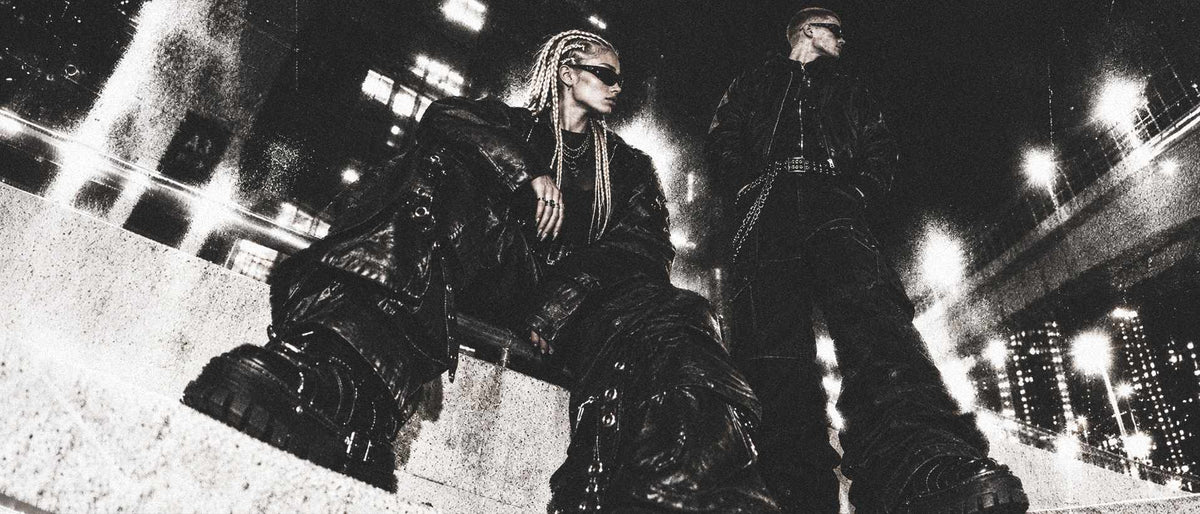
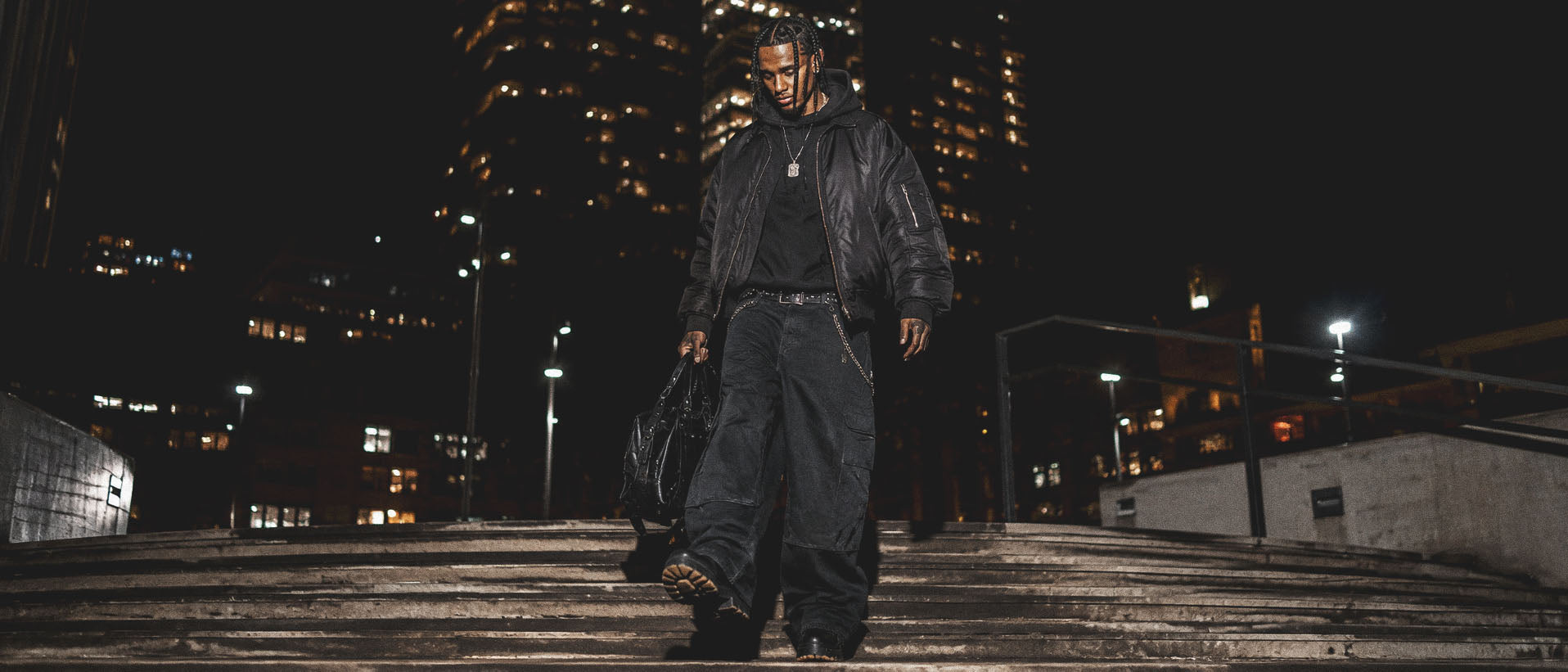
Opiumcore fashion is a dark, experimental streetwear aesthetic associated with Playboi Carti and the visual world around his Opium label. Its vocabulary includes contrasting proportions, distressed surfaces, striking footwear and metal details. The interesting part is how those elements interact: a compact upper half against expansive trousers, or a clean jacket framing a worn, irregular layer.
Black sets the palette. The cut gives it a point of view. You can recognize the references without buying a particular designer, copying an artist or treating every outfit as a concert costume.
What makes an outfit read as opiumcore?

There is no official checklist. In its 2025 explanation of opium style, Vogue Polska emphasizes dark clothing, contrasting volumes and hip-hop and rock references. Those are useful identifiers, rather than rules that make every black outfit part of the same movement.
Look for relationships between the pieces:
- A deliberate shift in scale: a close-fitting torso above wide denim, a cropped jacket over an extended base layer, or broad shoulders meeting a narrower leg.
- Surface tension: a faded or shredded area beside an uninterrupted black panel, so the worn finish has something to contrast with.
- A decisive ending at the shoe: a visible boot toe, substantial sole or elongated shoe that gives the trouser leg a clear endpoint.
- A concentrated detail: hardware or a graphic that draws attention without making every part of the outfit equally busy.
None is exclusive to opiumcore. Their combination, alongside the cultural reference, makes the reading more specific. A plain black hoodie can belong in this wardrobe; it does not identify the aesthetic on its own.
Read the waist, then follow the hem

The waist is an especially useful place to understand an outfit. A shirt ending near the waistband leaves the rise and upper pockets visible. A longer shirt conceals them and moves the first strong horizontal line lower. Add a jacket, and its hem creates another break.
This is why cropped and fitted are different decisions. A cropped tee can have a wide body and loose sleeves. A fitted long-sleeve can extend below the hips. Before choosing either, separate body width from body length.
A compact top with wide trousers makes the change in volume easy to read. Loose clothing above and below can also work: keep an identifiable shoulder, an open center line or a visible waistband so the garments retain their individual shapes. Contrast is an option, not a requirement to alternate tight and baggy pieces.
Try changing only the top while keeping the pants and shoes fixed. Photograph both versions at the same height and distance. Compare where the waist disappears, where fabric gathers and whether the graphic moves with a fold. That reveals more than judging each piece separately on a hanger.
A working vocabulary of key pieces

Use this table to identify what a garment contributes. These are styling observations, not specifications for every item sold under an opiumcore label.
| Piece | Detail worth checking | Effect within the outfit |
|---|---|---|
| Fitted or compact top | Body length, sleeve fit, neckline | Exposes the transition into wider trousers |
| Oversized graphic tee | Print placement, shoulder drop, hem length | Creates a broad upper shape or a longer central layer |
| Wide-leg or flared denim | Rise, knee width, leg opening, inseam | Controls how volume travels toward the shoe |
| Zip hoodie or short jacket | Opening, shoulder shape, room through sleeves | Frames the base layer and introduces another hem |
| Boots or substantial sneakers | Toe profile, sole volume, overlap with pants | Finishes the lower outline |
| Belt or compact hardware | Buckle size, position, visibility | Places a focal detail near the waist |
Tops: give the graphic room to exist
A large print on a long tee may disappear beneath a zipped jacket or fold across the waistband. A smaller chest graphic can remain visible through an open front. Judge the placement in the combination you will actually wear.
Start with the streetwear T-shirt selection and compare shapes before graphics. Two shirts with similar artwork can behave differently when one has a shorter body or wider sleeves. Check the size chart where available; sizing up changes several measurements at once and may not create the crop you wanted.
Pants: baggy, wide and flared are not interchangeable
Baggy describes looseness; wide-leg describes the leg's general shape; a flare widens toward the bottom. Retail terminology overlaps, so the words alone cannot tell you how the thigh, knee and hem relate.
For a broad, relatively continuous lower outline, compare the leg from thigh to ankle. For a more pronounced change near the shoe, examine the knee-to-hem transition. The Voidstorm baggy jeans are a real FD reference to explore, with the current listing supplying the product details. The name does not establish a particular rise, fabric weight or stretch level.
Hoodies and jackets: the opening is part of the shape

An open zip creates two vertical edges and lets the base layer interrupt a dark outer surface. Closing it changes the composition, often concealing a graphic or belt that previously anchored the outfit.
Consider FD's Onyx acid-wash zip-up hoodie as a reference for that garment category. Decide whether you want the opening, the hood or the surface to take priority. Avoid buying a heavier second layer automatically: you need space through the armhole and sleeve, not simply a larger label size.
Distress works better when something stays clean

A frayed edge draws attention because it interrupts a continuous line. Put fraying, holes, large graphics and reflective hardware everywhere, and those interruptions become harder to distinguish.
Give one worn surface a quieter neighbor. Try faded denim against a smoother jacket, or an abraded tee beneath an unbroken outer panel. This does not require pristine clothes; it creates enough difference for the texture to remain legible.
Separate three things when evaluating a piece:
- Color: deep black, washed charcoal or a contrasting graphic.
- Surface: visible abrasion, a print, coating or knit texture.
- Construction: seams, panels, hems, pockets and the actual cut.
A photograph can show a faded effect without identifying how it was made. CottonWorks' denim-finishing resource describes multiple finishing approaches, including washing and abrasion. Similar-looking results do not prove identical processes, composition or care requirements.
Look closely around pockets and seams, then read the listing. A pale area might be a finish, printed artwork or simply reflected light. Keep uncertainty in the description instead of turning appearance into an invented material claim.
Footwear changes the last few inches

A wide trouser leg can form a clean column, fold onto a shoe or open around a boot. The same pants may do all three with different footwear.
A substantial rounded shoe can remain visible beneath a broad hem. An elongated toe can extend the line of a flare. Neither requires a designer logo. What matters here is the visible shape and the amount of cloth meeting it.
Check the combination while standing and walking:
- Look from the side. Is the back hem caught beneath the heel?
- Check the front break. Does it make a controlled fold, or obscure the shoe entirely?
- Take several steps. A pose that looks convincing in a photo may leave fabric dragging as soon as you move.
Adjust the inseam, cuff or shoe choice to suit the actual pair. Extra stacking is an aesthetic choice; a hem repeatedly underfoot is a practical problem. Photograph the outfit with the shoes you intend to wear before deciding that the pants need replacing.
Layer edges, not unnecessary bulk

A short outer layer over a longer tee gives you two visible lengths. An open jacket reveals a third line down the center. Those edges can be enough; adding another garment does not automatically make the look more developed.
Begin with the garment whose shape matters most. If it is a compact jacket, select an inner layer that sits comfortably inside its sleeves. If it is an oversized tee with a strong shoulder, an outer layer that compresses that shoulder changes the original effect.
Try this focused adjustment: keep the jacket and pants, then swap a thick hoodie for a lighter long-sleeve. Check whether the shoulders sit more cleanly, the cuffs stop bunching and the zipper closes without pulling. That is a fit test, not a rule against hoodies.
Weather matters too. You can preserve an interesting waistline, dark surface contrast and a clear trouser shape with fewer layers in heat. Dressing for the image should not mean ignoring the conditions you will spend the day in.
Hardware needs a place in the composition

A belt only functions as a visible styling detail when the top allows it to be seen. Before adding more accessories, try exposing an existing buckle with a shorter hem, an open jacket or a partial tuck.
In the streetwear belt selection, compare buckle scale and stud placement rather than assuming more metal means a stronger result. Nearby graphics, zipper pulls and chains can compete for the same small area.
Choose where you want attention to pause: the face, the waist or the lower silhouette. You can use several details, but changing their scale gives them a hierarchy. This is more flexible than a fixed limit on accessories and leaves room for both restrained and elaborate interpretations.
The cultural connection, without an invented origin story
The name connects to Carti's Opium world. The clothing draws on references that extend beyond one musician: streetwear, punk and goth imagery, skate clothing and experimental designer fashion.
Asha Farisha's November 2023 Men's Folio interview with three Kuala Lumpur creatives documents their interest in skateboarding, rap, fashion archives and custom reworking. Their account is valuable because it describes specific people interpreting the aesthetic through clothes. It does not establish a universal origin date or an official uniform.
An archive reference also needs precision. A named designer garment has its own collection and history; calling an unrelated black piece archive-inspired does not make it an archival item. Buying a particular label, owning rare pieces or resembling an artist is not a prerequisite for exploring proportion and texture.
Where it sits beside dark streetwear

Dark streetwear is the broader wardrobe territory. Opiumcore is a more specific cultural and visual reading within overlapping fashion references. The distinction cannot be settled by one accessory or a ban on certain shoes.
Use our dark streetwear explanation for that wider vocabulary, and the dark streetwear styling guide for broader outfit combinations. This guide concentrates on recognizing opiumcore and understanding the garment decisions behind it.
When exploring FD's opium-inspired clothing collection, start with a gap in the outline you already wear. Perhaps the jacket needs a shorter base, the pants need a different shoe, or a busy surface needs a quieter layer. Changing that one relationship can tell you more than adding another statement piece.
Leave a comment
This site is protected by hCaptcha and the hCaptcha Privacy Policy and Terms of Service apply.